
 By admin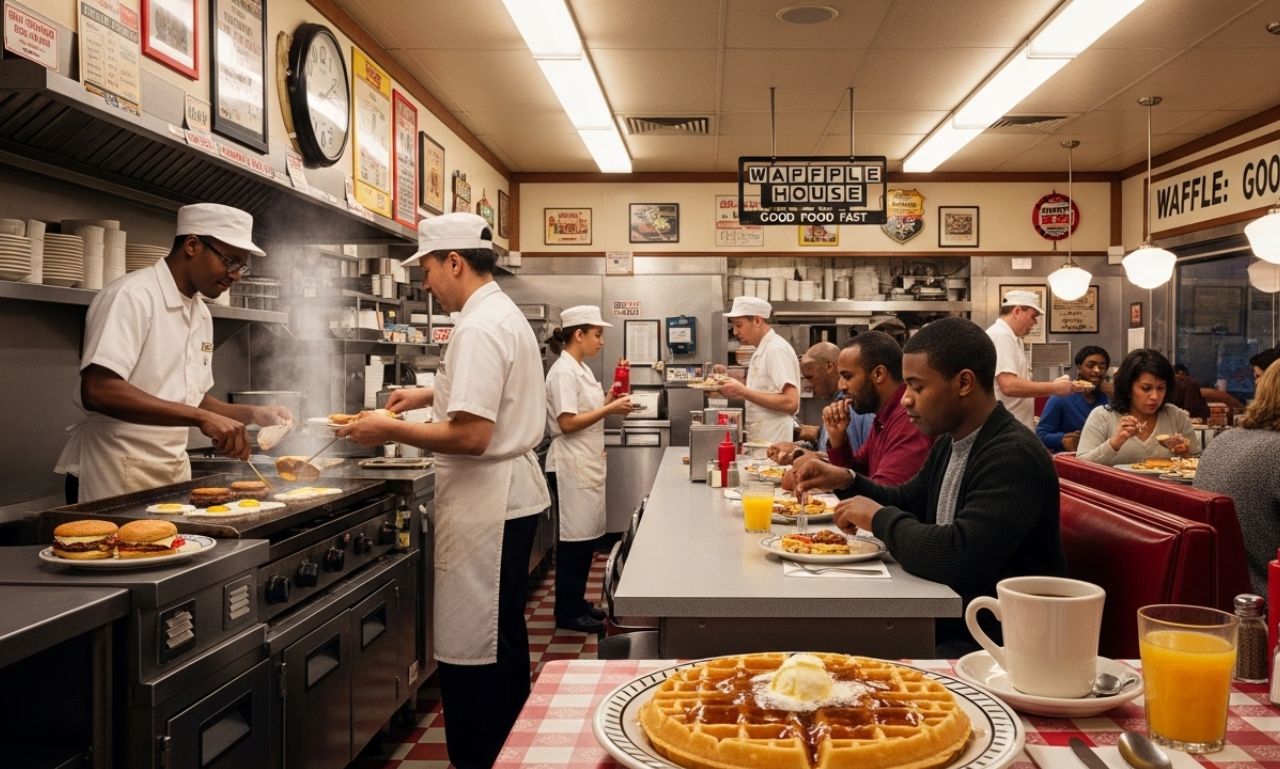
Waffle House is more than just a restaurant chain — it is a cultural institution deeply woven into the fabric of American roadside dining. Known for its круглосуточная service, affordable comfort food, and unmistakable yellow signage, Waffle House has built a reputation that extends far beyond waffles. From late-night travelers to early-morning workers, millions of customers rely on Waffle House for consistent meals and a welcoming atmosphere.
In this article, we’ll explore the history, menu, business model, cultural impact, and unique traditions that have made Waffle House a legendary name in the restaurant industry.
The History of Waffle House
The story of Waffle House began in 1955 in Avondale Estates, Georgia. Founders Joe Rogers Sr. and Tom Forkner had a simple vision: create a restaurant that combined quality food with fast service and round-the-clock availability. Their goal was to build a place where customers felt at home, no matter the time of day.
The first Waffle House location opened on Labor Day weekend in 1955. What started as a single diner quickly expanded into a beloved chain. Today, Waffle House operates more than 1,900 locations across 25 U.S. states, primarily in the South and Midwest.
The original restaurant has since been turned into the Waffle House Museum, preserving the brand’s rich heritage.
Waffle House Menu: Simple, Classic, and Satisfying
One of the reasons Waffle House remains popular is its straightforward yet satisfying menu. The focus is on classic American comfort food prepared fresh on a grill visible to customers.
Signature Waffles
As the name suggests, waffles are the star of the show. The traditional waffle is golden, crisp, and slightly sweet. Customers can also order variations such as:
-
Pecan waffles
-
Chocolate chip waffles
-
Peanut butter chip wafflesThese customizable options allow guests to enjoy their meal exactly how they like it.
All-Day Breakfast
Breakfast is available 24/7 at Waffle House, which is one of its biggest selling points. Popular breakfast items include:
-
Hashbrowns (scattered, smothered, covered, and more)
-
Bacon, sausage, and ham
-
Eggs cooked to order
-
Biscuits and gravy
The famous hashbrown ordering system has become part of the Waffle House identity, allowing customers to personalize their plate with specific toppings and cooking styles.
Lunch and Dinner Options
Although breakfast dominates the menu, Waffle House also serves:
-
Cheeseburgers
-
Grilled chicken sandwiches
-
Texas melts
-
Steak plates
The menu’s simplicity ensures quick service and consistent quality across locations.
The Unique Waffle House Experience
Walking into a Waffle House feels familiar no matter which state you’re in. The open kitchen design allows guests to see their food being prepared. This transparency builds trust and adds to the lively diner atmosphere.
Seating is typically arranged around a counter with additional booths, encouraging conversation between staff and customers. The environment is casual and unpretentious, which contributes to its broad appeal.
Unlike many modern chains that rely heavily on automation, Waffle House maintains a strong focus on personal interaction and hospitality.
24/7 Service: A Defining Feature
One of the defining characteristics of Waffle House is that most locations operate 24 hours a day, seven days a week. This commitment to constant service has made it a dependable option for:
-
Truck drivers
-
Shift workers
-
College students
-
Emergency responders
-
Travelers
Whether it’s 3 a.m. or 3 p.m., customers can count on Waffle Ho use to be open and ready to serve.
The Waffle House Index
Interestingly, Waffle Ho use plays an unexpected role in emergency management discussions. The “Waffle Ho use Index” is an informal metric used by the Federal Emergency Management Agency (FEMA) to assess disaster severity.
If a Waffle Ho use location closes during a hurricane or major storm, it signals serious conditions. Because the chain is known for staying open even during extreme weather, closures indicate significant infrastructure damage.
This unofficial index highlights the restaurant’s reputation for resilience and preparedness.
Business Model and Success Strategy
Waffle H ouse has maintained steady growth through a focused and disciplined business model. Key factors contributing to its success include:
Limited Menu Complexity
A streamlined menu allows for quick training and consistent preparation methods.
Employee Training
Staff members undergo detailed training to ensure efficiency and customer service excellence.
Regional Focus
Instead of expanding too rapidly nationwide, Waf fle House concentrated on specific regions, particularly the southeastern United States.
Company-Owned Locations
Unlike many fast-food chains, most Waf fle House locations are company-owned rather than franchised. This helps maintain consistent standards and brand identity.
Cultural Impact of Waffle House
Waffle Hous e has become an iconic symbol of Southern culture. It appears in movies, television shows, and music lyrics, often representing comfort, familiarity, and late-night gatherings.
The restaurant is also known for its unique workforce culture. Employees often memorize complex hashbrown orders and communicate using a distinctive shorthand system. This organized chaos has fascinated customers and contributed to the brand’s mystique.
For many Americans, Waffle Ho use is associated with road trips, post-game celebrations, and late-night conversations over coffee.
Community Connection and Loyalty
Customer loyalty is one of Waffle H ouse’s strongest assets. Generations of families return to their local Waffle Ho use for affordable meals and friendly service.
The chain’s commitment to remaining open during difficult times — including hurricanes and snowstorms — has strengthened its bond with communities. This reliability fosters trust and emotional attachment.
Waffle Ho use is not just a place to eat; it is often seen as a gathering space and a symbol of stability.
Challenges and Adaptation
Like many restaurant chains, Waffle Hou se has faced challenges such as rising food costs, labor shortages, and evolving consumer expectations. However, its consistent menu, strong brand identity, and loyal customer base have helped it navigate economic shifts.
Rather than radically changing its concept, Waffle Hou se has focused on refining operations and maintaining what customers already love.
Conclusion
Waffle Ho use stands as a testament to the enduring appeal of simple food, reliable service, and welcoming hospitality. Since its founding in 1955, the brand has grown into an American icon known for waffles, hashbrowns, and 24/7 availability.
From its humble beginnings in Georgia to nearly 2,000 locations across the country, Waffle Hou se continues to serve as a dependable diner experience. Its combination of tradition, resilience, and community connection ensures that it will remain a beloved part of American culture for years to come.