
 By admin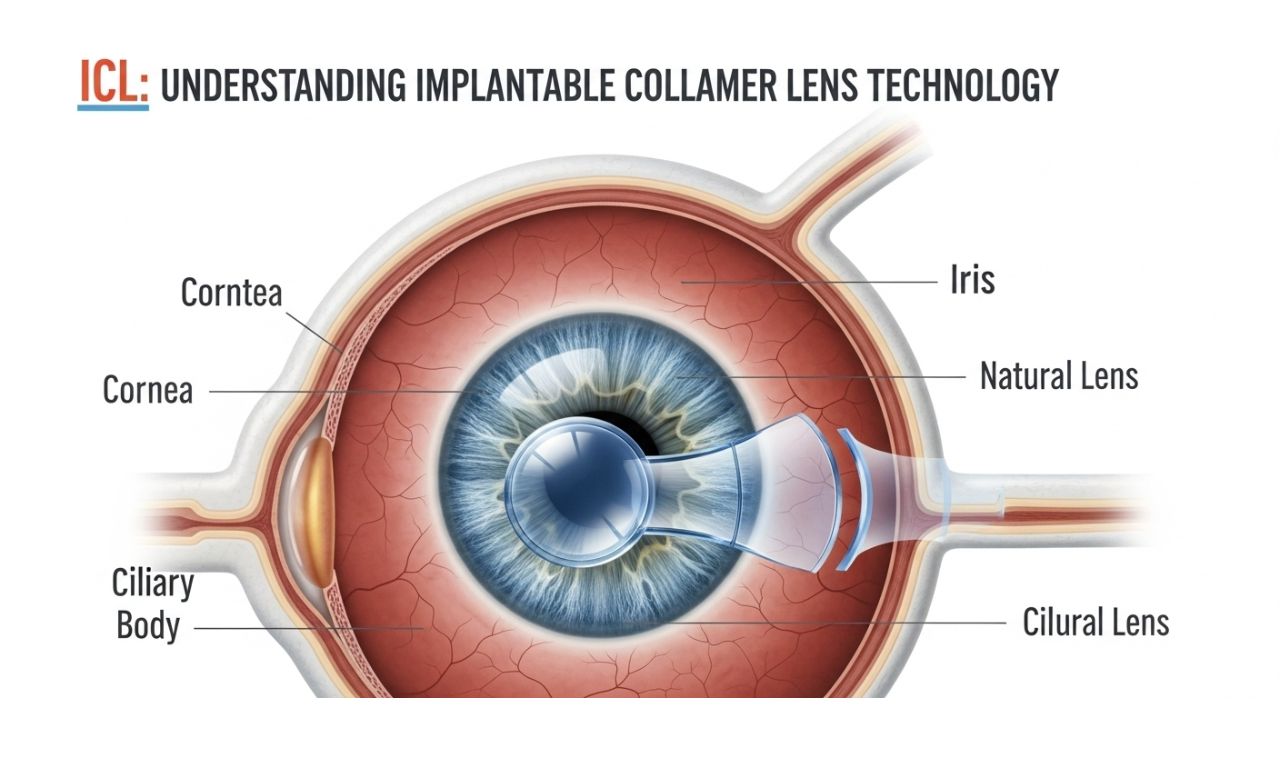
ICL, short for Implantable Collamer Lens, is an advanced vision correction procedure designed for individuals with myopia (nearsightedness), hyperopia (farsightedness), or astigmatism. Unlike traditional LASIK surgery, ICL does not remove corneal tissue but instead involves implanting a biocompatible lens inside the eye, providing clear and long-lasting vision.
What Is ICL?
The Implantable Collamer Lens (ICL) is a thin, flexible lens made from a biocompatible material called collamer. It is placed between the iris and the natural lens of the eye. The procedure is reversible, allowing the lens to be removed or replaced if necessary. ICL is particularly suitable for individuals who are not ideal candidates for laser eye surgery due to thin corneas or high prescriptions.
Who Is a Candidate for ICL?
ICL is recommended for patients who:
-
Are over 21 years old
-
Have stable vision for at least one year
-
Suffer from moderate to severe myopia, hyperopia, or astigmatism
-
Are unsuitable for LASIK due to corneal limitations
An ophthalmologist will conduct a thorough eye examination to determine if a patient is a suitable candidate.
How the ICL Procedure Works
The ICL procedure involves several steps:
-
Preoperative Assessment: Eye measurements and imaging are performed to determine the appropriate lens size and power.
-
Anesthesia: Local anesthesia is applied to numb the eye.
-
Lens Implantation: A small incision is made, and the collamer lens is carefully inserted behind the iris.
-
Recovery: The incision heals naturally without the need for stitches. Vision improves rapidly, often within 24 to 48 hours.
The minimally invasive nature of ICL surgery reduces complications and ensures a quick recovery.
Benefits of ICL
ICL offers several advantages over other vision correction methods:
-
High-Quality Vision: Provides sharp and clear vision, including for high prescriptions
-
Reversible: The lens can be removed or replaced if necessary
-
No Corneal Tissue Removal: Ideal for patients with thin or irregular corneas
-
UV Protection: Collamer lenses block harmful ultraviolet rays
-
Stable and Long-Lasting: Vision remains consistent over many years
These benefits make ICL a preferred choice for many patients seeking an alternative to LASIK.
Risks and Considerations
While ICL is generally safe, potential risks include:
-
Glare or halos around lights
-
Increased intraocular pressure
-
Cataract formation (rare)
-
Infection or inflammation
-
Lens misalignment
A qualified ophthalmologist will discuss these risks and ensure that proper precautions are taken before the procedure.
Recovery and Aftercare
Postoperative care is crucial for optimal results:
-
Use prescribed eye drops to prevent infection and inflammation
-
Avoid rubbing the eyes
-
Attend follow-up appointments to monitor eye health
-
Avoid swimming or strenuous activities for a few weeks
Most patients experience significant vision improvement within a day or two, with full stabilization over a few weeks.
ICL vs. LASIK
IC L and LASIK are both effective for vision correction, but they differ in several ways:
| Feature | ICL | LASIK |
|---|---|---|
| Procedure Type | Implantable lens | Laser reshaping of cornea |
| Corneal Tissue | Preserved | Removed |
| Suitable For | High prescriptions, thin corneas | Mild to moderate prescriptions |
| Reversible | Yes | No |
| Recovery | Rapid | Rapid |
| UV Protection | Yes | No |
IC L is particularly advantageous for patients with high prescriptions or corneal limitations.
Cost of ICL Surgery
The cost of IC L surgery varies depending on the region, surgeon, and technology used. On average, the procedure ranges from $4,000 to $6,000 per eye. While the upfront cost is higher than LASIK, many patients consider it a worthwhile investment due to its long-lasting results and quality of vision.
Conclusion
IC L (Implantable Collamer Lens) offers a safe, effective, and reversible solution for individuals seeking vision correction. With benefits such as high-quality vision, UV protection, and minimal invasiveness, it is an excellent alternative for patients unsuitable for laser eye surgery. Consulting a qualified ophthalmologist is essential to determine if IC L is the right choice for your vision needs.