
 By admin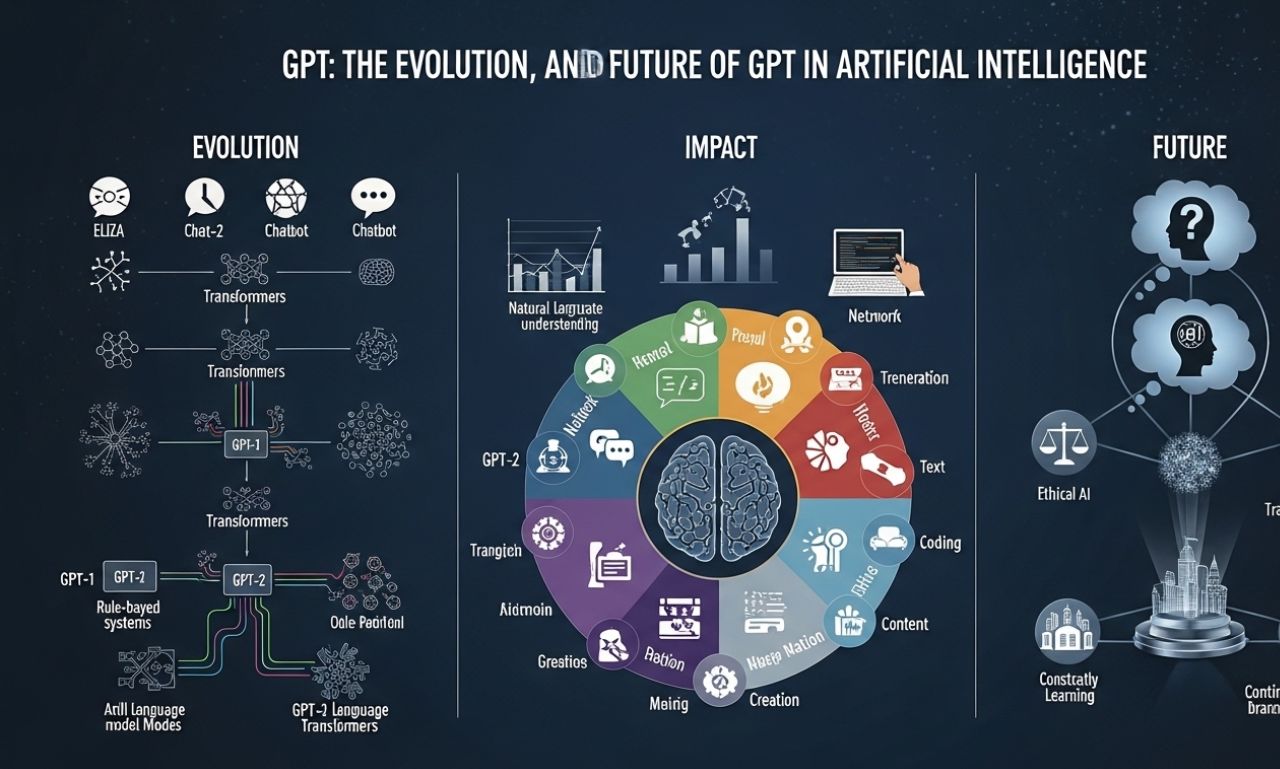
GPT has become one of the most recognized terms in the field of artificial intelligence. Over the past few years, GPT technology has transformed how people interact with machines, create content, conduct research, and automate tasks. From chatbots and virtual assistants to advanced content generation systems, GPT continues to shape digital innovation worldwide. Understanding GPT requires exploring its origins, development, real-world applications, and long-term implications in the rapidly evolving AI landscape.
What Is GPT?
Understanding the Meaning of GPT
GPT stands for Generative Pre-trained Transformer. It is a type of artificial intelligence model designed to understand and generate human-like text. GPT models are trained on massive datasets, allowing them to predict and produce coherent responses based on input prompts.
The “Generative” aspect refers to the system’s ability to create new text. “Pre-trained” indicates that the model has already learned patterns from large volumes of data before being fine-tuned for specific tasks. The term “Transformer” describes the neural network architecture that enables GPT to process and understand context effectively.
How GPT Works
GPT operates by analyzing patterns in language. It does not think like a human but instead predicts the most likely sequence of words based on prior data. Using deep learning and advanced algorithms, GPT processes input text and generates responses that often appear conversational and informative.
The transformer architecture allows GPT to consider context from earlier parts of a conversation, which improves coherence and relevance.
The History and Development of GPT
Early Versions of GPT
The development of G PT began as part of broader research into natural language processing. Early versions demonstrated that large-scale language models could produce meaningful text. As computing power increased, newer versions of G PT became more sophisticated and capable.
Each iteration improved in areas such as contextual understanding, accuracy, and creative output.
Advancements in GPT Technology
Over time, G PT models expanded in size and complexity. Larger training datasets and enhanced neural networks allowed G PT systems to handle more nuanced tasks. These improvements made G PT suitable for professional applications, including writing assistance, coding support, and data analysis.
The ongoing refinement of G PT technology continues to push the boundaries of machine-generated language.
Applications of GPT in Modern Industries
GPT in Content Creation
One of the most visible uses of G PT is content generation. Writers, marketers, and businesses use G PT tools to draft articles, create marketing copy, and brainstorm ideas. G PT helps streamline workflows by generating structured text quickly.
Although human editing remains important, G PT significantly reduces the time required to produce initial drafts.
GPT in Customer Support
Many companies integrate G PT into customer service platforms. AI-powered chatbots use G PT to respond to customer inquiries in real time. These systems can answer frequently asked questions, guide users through processes, and provide basic troubleshooting.
By leveraging G PT, businesses improve response speed and reduce operational costs.
GPT in Education
Educational institutions and students benefit from G PT in various ways. It can assist with explanations, summarization, and study guidance. G PT-based tools help learners understand complex subjects through simplified language.
Teachers may also use G PT to generate lesson outlines or practice questions.
GPT in Programming and Development
Developers increasingly rely on G PT-powered coding assistants. These tools can suggest code snippets, debug errors, and explain programming concepts. G PT enhances productivity by reducing repetitive coding tasks and offering real-time support.
Benefits of GPT Technology
Efficiency and Automation
O ne of the main advantages of G PT is efficiency. It automates tasks that previously required significant manual effort. From drafting emails to generating reports, G PT saves time and increases productivity.
Scalability
G PT systems can handle thousands of queries simultaneously. This scalability makes them ideal for businesses with high user engagement.
Accessibility
G PT improves access to information by offering conversational interfaces. Users can interact with complex systems through simple language, making technology more user-friendly.
Creativity Support
Although G PT does not possess human creativity, it can assist with brainstorming and idea generation. Many creators use G PT as a collaborative tool to overcome writer’s block or explore new perspectives.
Challenges and Limitations of GPT
Accuracy and Reliability
While G PT produces impressive results, it is not flawless. It may generate incorrect or outdated information. Users must verify critical details independently.
Ethical Considerations
The widespread use of G PT raises ethical concerns, including misinformation, plagiarism, and data privacy. Responsible use and clear guidelines are essential to mitigate risks.
Dependence on Data
GPT relies heavily on training data. Biases present in data sources can influence outputs. Developers continually work to reduce bias and improve fairness.
The Future of GPT
Advancements in Contextual Understanding
Future versions of G PT are expected to demonstrate improved reasoning and deeper contextual awareness. Ongoing research focuses on enhancing reliability and reducing factual errors.
GPT and Multimodal Capabilities
Modern AI systems increasingly integrate text, images, and other media. G PT models are evolving to process multiple types of input, expanding their usefulness across industries.
GPT in Business Innovation
As organizations embrace digital transformation, G PT will likely become central to automation strategies. From workflow optimization to intelligent data analysis, G PT continues to influence business innovation.
GPT and the Broader AI Landscape
G PT represents a sign ificant milestone in artificial intelligence development. It demonstrates how machine learning models can interact with humans in natural language. However, G PT is just one component of a broader AI ecosystem that includes computer vision, robotics, and predictive analytics.
The integration of G PT with other technologies creates powerful solutions for healthcare, finance, education, and entertainment.
Responsible Use of GPT
As G PT becomes more integrated into daily life, responsible use remains critical. Transparency, ethical guidelines, and user education help ensure positive outcomes. Organizations implementing G PT should establish clear policies to address data protection and content accuracy.
Users should approach G PT-generated information thoughtfully, recognizing both its strengths and limitations.
Conclusion:
G PT has transformed how people interact with technology. By generating human-like text, G PT enables automation, creativity support, and improved communication across industries. Its evolution reflects significant advancements in artificial intelligence research.
While challenges remain, the future of G PT appears promising. Continued innovation, ethical oversight, and technological refinement will shape the next generation of G PT systems. As AI continues to evolve, G PT stands as a powerful example of how machine learning can redefine digital interaction and productivity.
Understanding G PT today provides insight into the future of artificial intelligence and its expanding role in modern society.