
 By admin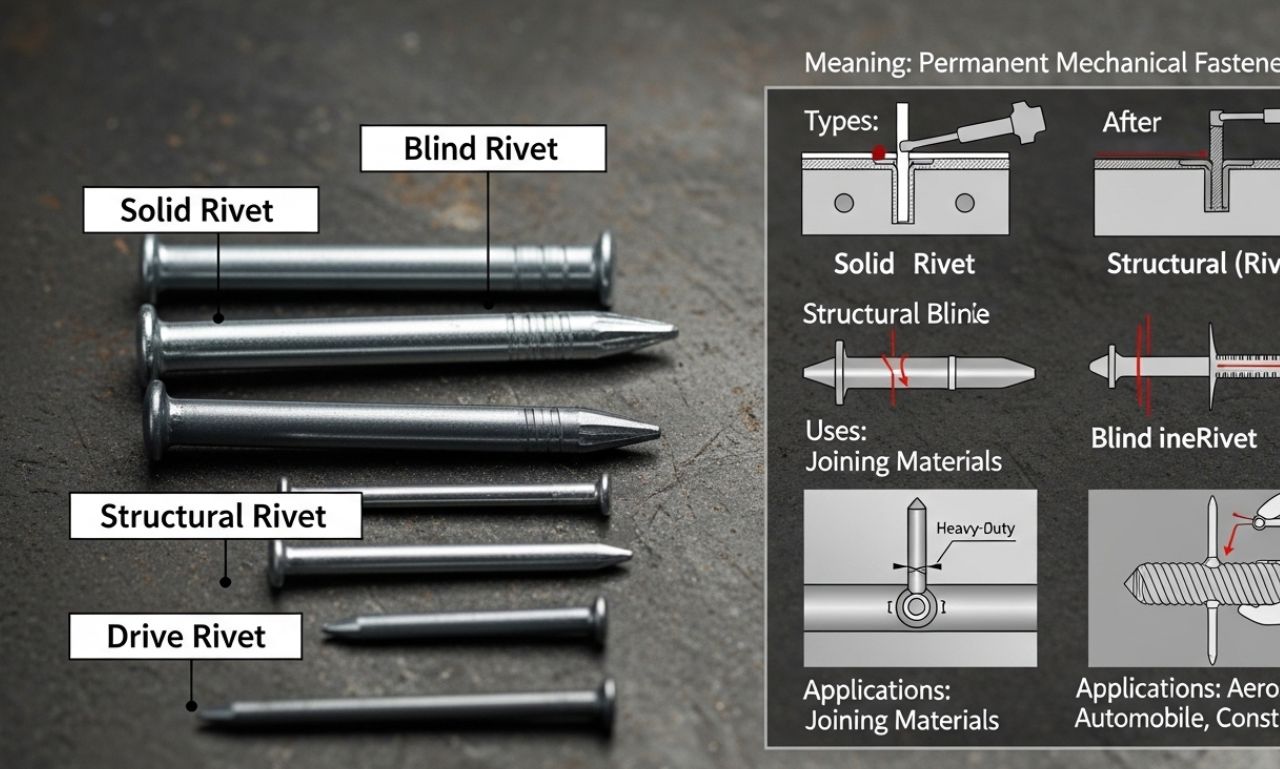
Understanding the rivet definition is essential in industries such as construction, manufacturing, aerospace, and mechanical engineering. A rivet is a permanent mechanical fastener used to join two or more materials together. Unlike screws or bolts, rivets are designed to remain fixed in place once installed, providing strong and durable connections.
In this comprehensive guide, we will explore the rivet definition, its structure, types, working process, materials, advantages, and common applications. Whether you are a student, engineer, or DIY enthusiast, this article will give you a clear and practical understanding of rivets.
Rivet Definition in Simple Terms
The basic rivet definition describes a rivet as a short cylindrical metal pin with a head on one end. It is inserted into pre-drilled holes in two or more pieces of material and then deformed (usually by hammering or using a rivet gun) to create a second head. This deformation locks the materials together permanently.
Once installed, a rivet cannot be easily removed without destroying it. This makes rivets ideal for applications where a strong, permanent joint is required.
Parts of a Rivet
To fully understand the rivet definition, it is important to know the basic components of a rivet:
1. Head
The pre-formed top portion of the rivet that remains visible after installation.
2. Shank (Body)
The cylindrical section that passes through the materials being joined.
3. Tail
The end of the rivet that is deformed during installation to create a second head.
Together, these parts form a secure mechanical connection that distributes load across the joined materials.
How Rivets Work
The working principle behind the rivet definition is simple but highly effective. The installation process generally follows these steps:
-
Holes are drilled into the materials that need to be joined.
-
The rivet is inserted into the aligned holes.
-
Force is applied to the tail end using a hammer or rivet gun.
-
The tail expands and flattens, forming a second head.
-
The joint becomes permanently secured.
The expansion of the rivet inside the hole prevents it from loosening, even under vibration or heavy load.
Types of Rivets
Expanding on the rivet definition, there are several types of rivets designed for specific applications.
1. Solid Rivets
These are the most traditional and strongest type. Commonly used in aircraft construction and heavy structural applications.
2. Blind Rivets (Pop Rivets)
Used when access is available from only one side of the material. Popular in construction, automotive repair, and household projects.
3. Tubular Rivets
Hollow at one end, requiring less force to install. Often used in lightweight assemblies.
4. Drive Rivets
Installed by hammering a central pin into the rivet body. Common in signage and nameplates.
5. Structural Rivets
Designed for heavy-duty applications requiring high strength and durability.
Each variation fits within the broader rivet definition but differs in installation method and load-bearing capacity.
Materials Used for Rivets
Rivets are made from various materials depending on the application. Common materials include:
-
Steel (strong and durable)
-
Aluminum (lightweight and corrosion-resistant)
-
Copper (good conductivity and corrosion resistance)
-
Stainless steel (high strength and rust resistance)The material choice affects the strength, corrosion resistance, and overall performance of the joint.
Common Applications of Rivets
The rivet definition becomes clearer when looking at real-world applications. Rivets are widely used in:
Aerospace Industry
Aircraft structures rely heavily on rivets because they provide lightweight yet strong joints.
Construction
Steel frameworks, bridges, and metal structures often use rivets for permanent connections.
Automotive Industry
Rivets are used in body panels, frames, and interior assemblies.
Manufacturing
Appliances, machinery, and sheet metal products frequently incorporate riveted joints.
DIY and Home Projects
Blind rivets are commonly used for quick repairs and lightweight fastening.
Because rivets resist vibration and maintain structural integrity over time, they remain essential in many industries.
Advantages of Rivets
Understanding the rivet definition also involves knowing their benefits:
1. Strong Permanent Joint
Rivets create durable and secure connections.
2. Vibration Resistance
They are less likely to loosen compared to screws or bolts.
3. Simple Installation
Especially blind rivets, which require minimal tools.
4. Cost-Effective
Rivets are relatively inexpensive and efficient for large-scale production.
5. Lightweight Options
Aluminum rivets offer strength without adding excessive weight.
Disadvantages of Rivets
Despite their advantages, rivets also have limitations:
-
They are permanent and cannot be easily removed.
-
Installation requires drilling holes, which may weaken materials.
-
Not adjustable once set.
-
Less suitable for joints that require frequent maintenance.
Considering these factors helps determine whether rivets are the right fastening solution.
Rivets vs. Other Fasteners
To better understand the rivet definition, it helps to compare rivets with other fasteners:
-
Screws and Bolts: Removable and adjustable but may loosen over time.
-
Welding: Creates a strong bond but requires specialized equipment and can distort materials.
-
Adhesives: Provide smooth finishes but may not handle heavy loads.
Rivets are often chosen when permanence and vibration resistance are priorities.
Historical Background of Rivets
Rivets have been used for centuries. They were widely employed in building historic structures such as bridges, ships, and boilers before modern welding techniques became common. In early industrial construction, rivets were the primary method for joining steel components.
Although welding has replaced rivets in some applications, rivets remain essential in aviation and specific structural uses due to their reliability and predictable strength.
Conclusion
The complete rivet definition describes a rivet as a permanent mechanical fastener used to securely join materials by deforming its tail to create a second head. Simple in design yet highly effective, rivets provide strong, vibration-resistant joints across numerous industries.
From aerospace engineering to home improvement projects, rivets continue to play a vital role in modern manufacturing and construction. By understanding the types, materials, advantages, and applications outlined in this guide, you can confidently identify when rivets are the right fastening solution for your needs.