
 By admin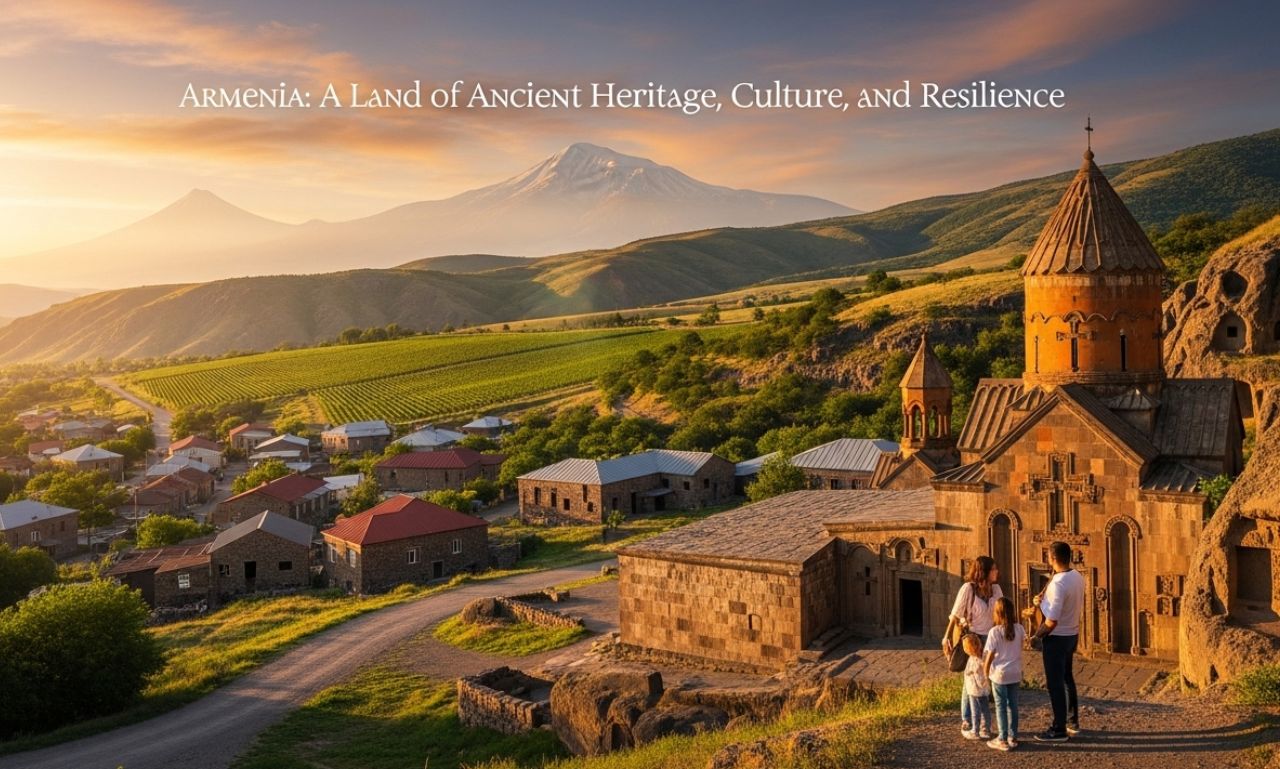
Armenia is a landlocked country located in the South Caucasus region, positioned at the crossroads of Europe and Asia. Bordered by Turkey to the west, Georgia to the north, Azerbaijan to the east, and Iran to the south, Armenia occupies a strategically significant region with a complex historical background.
Despite its modest size, Armenia has played a vital role in world history. Known for its ancient civilization, rich cultural traditions, and resilient spirit, the country continues to preserve its heritage while adapting to modern developments.
The Ancient History of Armenia
Early Civilizations in Armenia
The territory of Armenia has been inhabited since prehistoric times. It was home to the ancient Kingdom of Urartu in the 9th century BCE, which laid foundations for Armenian statehood. Over centuries, Armenia experienced periods of independence and foreign rule under empires such as the Persians, Romans, Byzantines, and Ottomans.
One of the most significant milestones in Armenian history occurred in 301 AD when Armenia became the first nation to adopt Christianity as a state religion. This decision shaped the country’s cultural and spiritual identity.
The Armenian Genocide
A tragic chapter in Armenia’s history is the Armenian Genocide of 1915, during which approximately 1.5 million Armenians perished under the Ottoman Empire. This event deeply influenced the Armenian diaspora and national consciousness. Today, remembrance and recognition remain central to Armenian identity and international relations.
Geography and Natural Beauty of Armenia
Armenia is known for its mountainous landscape, high plateaus, and scenic valleys. The country sits at an average elevation of about 1,800 meters above sea level, making it one of the highest countries in the region.
One of the most iconic landmarks is Mount Ararat. Although located in modern-day Turkey, Mount Ararat holds deep symbolic importance for Armenians and appears on the national coat of arms.
Another remarkable destination is Lake Sevan, one of the largest freshwater high-altitude lakes in the world. Surrounded by monasteries and picturesque landscapes, it is a popular attraction for both locals and tourists.
The Capital City: Yerevan
The capital of Armenia, Yerevan, is one of the oldest continuously inhabited cities in the world. Founded in 782 BCE, Yerevan combines ancient heritage with modern urban life.
Visitors can explore Republic Square, the Cascade Complex, and numerous museums that highlight Armenia’s artistic and historical legacy. The city is also known for its pink-hued architecture, created from volcanic tuff stone.
Yerevan serves as the political, economic, and cultural center of Armenia, offering vibrant nightlife, traditional cuisine, and a welcoming atmosphere.
Culture and Traditions in Armenia
Religion and Spiritual Heritage
Christianity remains central to Armenian identity. The Armenian Apostolic Church is one of the world’s oldest Christian institutions. Monasteries such as Geghard and Tatev reflect the deep spiritual history of the nation.
Religious festivals and traditions continue to play a significant role in Armenian life, blending faith with cultural celebration.
Language and Literature
The Armenian language has its own unique alphabet, created in 405 AD by Mesrop Mashtots. This alphabet helped preserve Armenian literature and identity throughout centuries of foreign rule.
Armenian literature, poetry, and music reflect themes of resilience, faith, and homeland. Folk dances and traditional instruments remain an important part of national celebrations.
Economy and Modern Development
Since gaining independence from the Soviet Union in 1991, Armenia has undergone economic transformation. The country has focused on technology, information technology services, agriculture, and tourism as key sectors.
Armenia’s growing tech industry has earned it recognition as an emerging innovation hub in the Caucasus region. Startups and IT companies contribute significantly to economic growth.
Agriculture remains vital, with vineyards producing well-known Armenian wines and brandy. Tourism also plays an expanding role as more travelers discover Armenia’s historical sites and natural beauty.
Tourism in Armenia
Armenia offers diverse travel experiences, from ancient monasteries carved into cliffs to vibrant cultural festivals. Visitors can explore UNESCO-listed heritage sites, hike scenic mountain trails, and enjoy traditional Armenian cuisine.
Armenian dishes such as khorovats (barbecue) and lavash bread reflect centuries-old culinary traditions. Hospitality is a cornerstone of Armenian culture, and guests are often welcomed warmly.
The combination of history, spirituality, and scenic landscapes makes Armenia an increasingly attractive destination for global travelers.
Armenia’s Global Diaspora
A significant Armenian diaspora exists worldwide, particularly in countries such as Russia, France, and the United States. The diaspora plays an important role in supporting Armenia’s economy, culture, and international recognition.
Cultural ties between Armenia and its diaspora communities help preserve traditions while promoting global awareness of Armenian heritage.
Conclusion
Armenia stands as a testament to resilience and cultural preservation. From its ancient history and Christian heritage to its breathtaking landscapes and modern innovation, the country offers a unique blend of tradition and progress.
Despite facing historical challenges, Armenia continues to build its future while honoring its past. Its people, culture, and heritage remain central to its identity, making Armenia a nation of enduring strength and significance.