
 By admin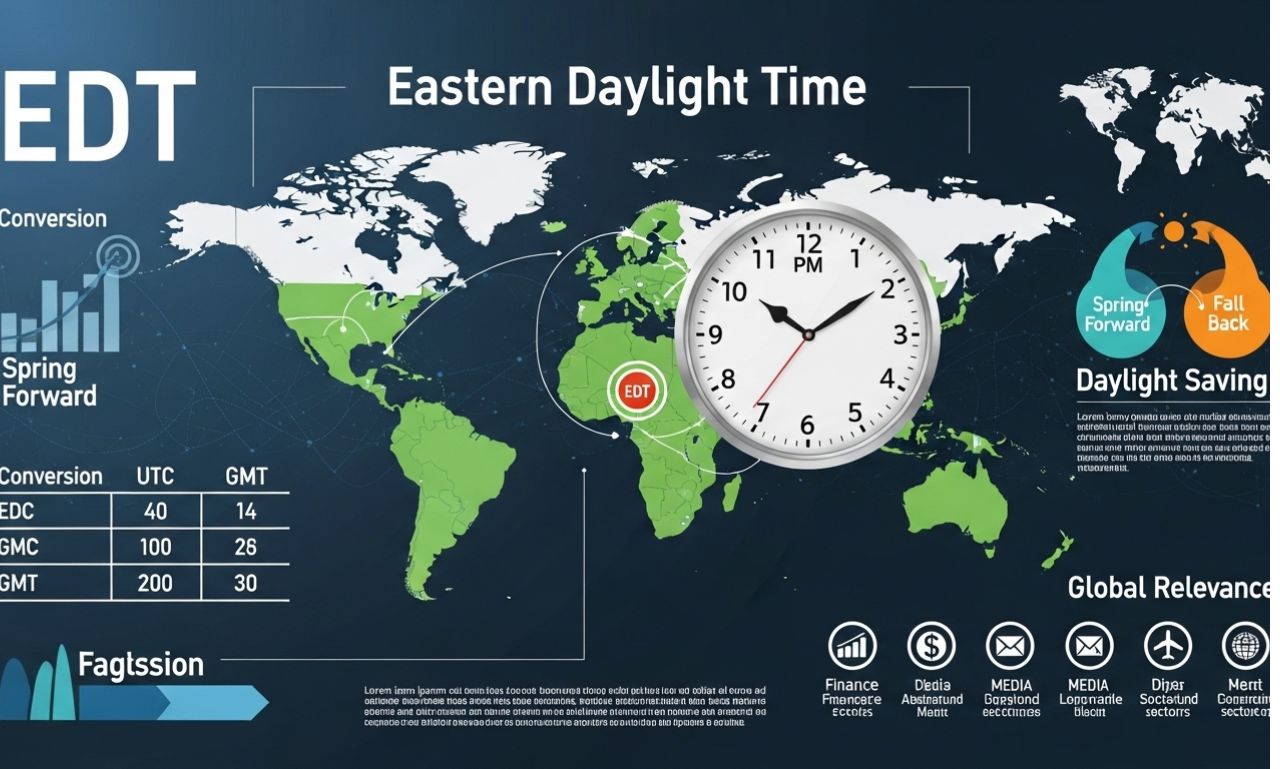
EDT time, or Eastern Daylight Time, is a critical time zone in North America, widely used in the United States, Canada, and parts of the Caribbean. Understanding EDT is essential for international communication, travel planning, business coordination, and digital scheduling. This article provides a comprehensive guide to EDT time, including its definition, difference from other time zones, conversion methods, and practical usage in everyday life.
What Is EDT Time?
EDT stands for Eastern Daylight Time, the daylight saving time observed in the Eastern Time Zone of North America. It is used during the summer months when clocks are set forward by one hour to make better use of daylight.
-
UTC Offset: EDT is UTC−4, which means it is 4 hours behind Coordinated Universal Time (UTC).
-
Regions Observing EDT: Parts of the United States, Canada, and select Caribbean islands follow EDT during daylight saving months.
EDT typically begins in March and ends in November, when clocks revert to Eastern Standard Time (EST, UTC−5).
EDT vs EST: Key Differences
Understanding the difference between EDT and EST is crucial for accurate scheduling.
| Feature | EDT | EST |
|---|---|---|
| Full Name | Eastern Daylight Time | Eastern Standard Time |
| UTC Offset | UTC−4 | UTC−5 |
| Observed | During Daylight Saving Time (March–November) | During Standard Time (November–March) |
| Purpose | Utilizes longer daylight hours in summer | Standard time for winter months |
When planning meetings or travel, confusing EDT with EST can lead to missed appointments, so always check which is being referenced.
EDT Time Conversion
Converting EDT time to other time zones is essential for global coordination.
To UTC (Coordinated Universal Time)
-
EDT + 4 hours = UTC
Example: 10:00 AM EDT → 2:00 PM UTC
To PST (Pacific Standard Time)
-
EDT − 3 hours = PST
Example: 10:00 AM EDT → 7:00 AM PST
To GMT (Greenwich Mean Time)
-
GMT and UTC are often used interchangeably. Therefore:
EDT + 4 hours = GMT
To IST (Indian Standard Time)
-
EDT + 9 hours 30 minutes = IST
Example: 10:00 AM EDT → 7:30 PM IST
Accurate conversions are important for businesses, travelers, and online events.
Why EDT Time Matters
1. Business Coordination
Businesses across multiple time zones rely on EDT to schedule meetings and deadlines. For instance, Wall Street and other financial institutions in New York operate on EDT during the summer months.
2. Travel and Aviation
Flight schedules, airport operations, and international travel often reference EDT. Misunderstanding the time zone could lead to missed flights or confusion.
3. Digital Communication
Online meetings, webinars, and virtual events frequently list EDT as a reference. Knowing how to convert it ensures global participants join at the correct time.
How to Remember EDT Time
-
Daylight Saving: Remember that EDT is used when clocks “spring forward” in March.
-
Offset Check: UTC−4 is a quick way to check differences from other time zones.
-
Region-Based Memory: Think of major cities like New York, Toronto, and Miami as references for EDT.
EDT Time in Popular Culture
Television schedules, sports events, and streaming platforms often use EDT to indicate local broadcast times. For example, major sports games in the U.S., such as NBA matches or NFL events, commonly list EDT as the standard reference for Eastern audiences.
Daylight Saving and Its Impact
Advantages
-
Maximizes daylight in the evening hours
-
Reduces energy consumption in some regions
-
Encourages outdoor activity and productivity
Disadvantages
-
Can disrupt sleep schedules
-
Confuses international scheduling
-
Requires manual adjustment for clocks not synced automatically
Despite these challenges, EDT remains the standard for summer months in the Eastern Time Zone.
Tips for Dealing with EDT Time
-
Use World Clocks: Digital devices can automatically convert EDT to your local time.
-
Check Event Details: Online events often specify whether times are EDT or EST.
-
Plan Ahead: For international meetings, always verify the correct offset to avoid errors.
-
Stay Updated: Daylight saving dates can change, so check official government announcements.
Conclusion
E DT time is a fundamental aspect of global timekeeping, particularly for those in the Eastern Time Zone of North America. Understanding its definition, difference from EST, conversion methods, and practical applications is crucial for business, travel, and communication. By mastering E DT time, you can ensure timely coordination, avoid confusion, and stay connected across regions.