
 By admin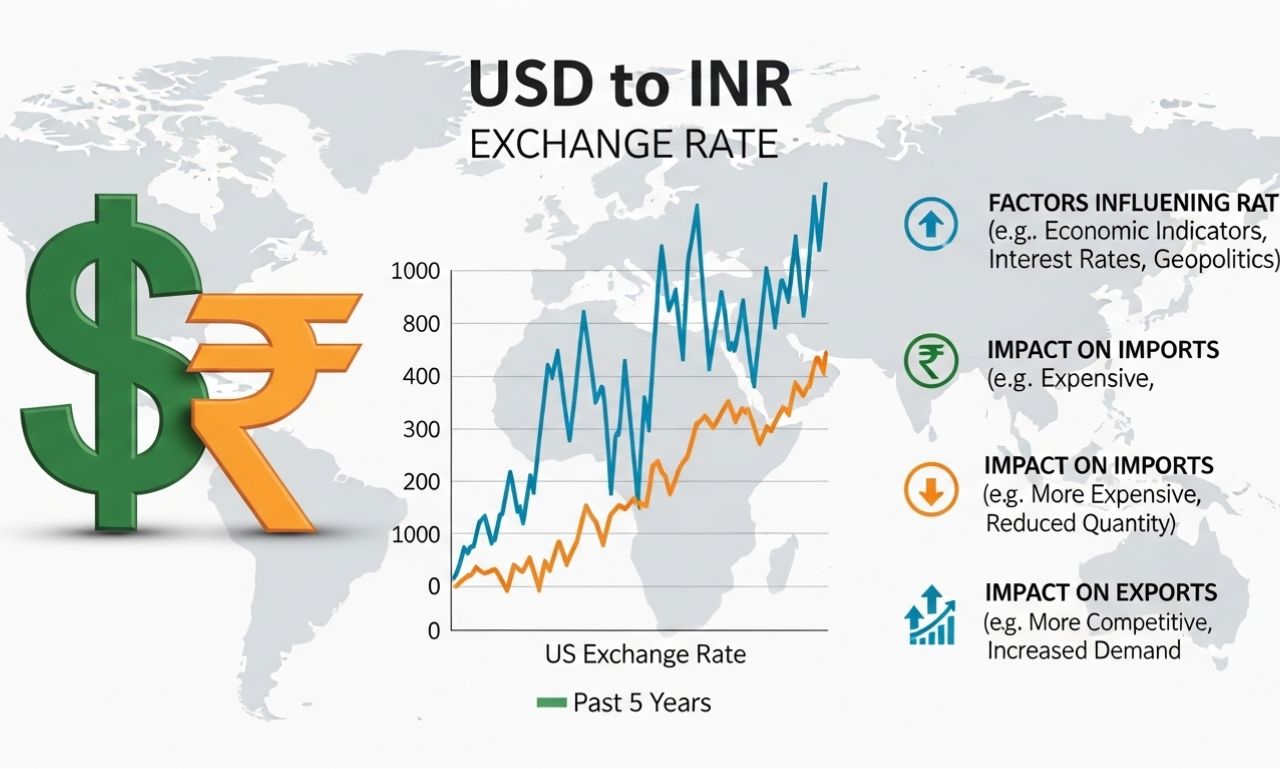
If you are looking to convert currency or track international financial trends, USD to INR is one of the most important exchange rates to monitor. The US Dollar (USD) and the Indian Rupee (INR) are crucial currencies in global trade, finance, and remittances. Understanding the dynamics behind this currency pair helps businesses, travelers, investors, and individuals make informed decisions.
This article provides a comprehensive guide to the USD to INR exchange rate, its historical trends, factors influencing it, and practical tips for converting currency.
What Is USD to INR?
USD to INR represents how many Indian Rupees one US Dollar can buy. For example, if the exchange rate is 1 USD = 90.67 INR, it means that a single US Dollar is equivalent to 90.67 Indian Rupees. This rate fluctuates continuously due to global market forces.
The exchange rate is used in multiple scenarios:
-
International trade between the US and India
-
Currency conversion for travelers
-
Foreign investments and remittances
-
Financial markets and forex trading
Historical Trends of USD to INR
Over the decades, the USD to INR rate has experienced significant changes. In the 1970s, 1 USD was equivalent to less than 10 INR. Due to inflation, economic reforms, and globalization, the Rupee has depreciated against the Dollar gradually.
Major historical trends include:
-
1991 Economic Reforms: Liberalization of the Indian economy led to a floating exchange rate system, influencing USD to INR.
-
Global Financial Crises: Events like the 2008 crisis caused sharp fluctuations in the exchange rate.
-
Recent Trends: In recent years, the USD has strengthened globally, and the IN R has fluctuated around 70–90 INR per Dollar depending on economic conditions.
Understanding these trends helps businesses and investors plan for currency risk and hedging strategies.
Factors Affecting USD to INR Exchange Rate
The USD to IN R exchange rate is influenced by multiple domestic and international factors:
1. Economic Performance
India’s GDP growth, inflation, and trade balance directly impact the Rupee. A strong economy usually strengthens the INR against the USD, while economic challenges can weaken it.
2. Interest Rates
Central banks, such as the Federal Reserve in the US and the Reserve Bank of India (RBI), influence the exchange rate through interest rate policies. Higher US interest rates can attract capital to the Dollar, increasing USD to IN R.
3. Oil Prices
India imports a significant portion of its oil needs. Rising global oil prices can increase import costs, weakening the Rupee and affecting USD to IN R.
4. Political Stability
Government policies, elections, and geopolitical events in both the US and India can impact investor confidence, influencing the exchange rate.
5. Global Market Trends
The strength of the USD against other major currencies affects the Rupee indirectly. Foreign investment inflows and outflows also play a role in determining USD to IN R.
How USD to INR Impacts Different Sectors
1. Businesses and Trade
Companies engaged in importing or exporting goods between India and the US rely heavily on USD to IN R rates. A stronger Dollar makes imports more expensive and exports more profitable, while a weaker Dollar does the opposite.
2. Investors and Forex Traders
Forex traders and investors track USD to IN R to capitalize on currency fluctuations. Hedging strategies are used to minimize losses from unpredictable movements.
3. Travelers
For individuals traveling from the US to India or vice versa, understanding USD to IN R helps plan expenses. A favorable exchange rate can save significant money on travel, accommodation, and shopping.
4. Remittances
Millions of Indians abroad send money home. The USD to IN R rate directly impacts the amount received by family members in India.
How to Check USD to INR Rates
Accurate and real-time USD to IN R rates are available through:
-
Forex websites and online converters
-
Banking portals and apps
-
Financial news channels
-
Currency exchange services
It’s important to note that the actual rate offered by banks or exchange services may include a small margin above the market rate, commonly known as the spread.
Tips for Converting USD to INR
-
Compare Rates: Different banks and exchange services offer slightly different rates.
-
Avoid Airport Exchanges: Currency exchange counters at airports often offer less favorable USD to IN R rates.
-
Track Market Trends: If planning large transactions, monitor the rate for a favorable conversion.
-
Use Digital Services: Online platforms often provide competitive rates and lower fees.
Future Outlook of USD to INR
Experts predict that USD to IN R will continue to fluctuate based on global economic trends, trade policies, and domestic reforms. While short-term movements are unpredictable, India’s long-term economic growth and foreign investment inflows may strengthen the Rupee over time.
Businesses, travelers, and investors should stay updated with real-time rates and forecasts to make informed financial decisions.
Conclusion
The USD to IN R exchange rate is more than just a number; it reflects the economic relationship between two of the world’s largest economies. By understanding the historical trends, influencing factors, and practical implications, individuals and businesses can make smarter financial choices.
Whether you are traveling, investing, trading, or sending remittances, keeping track of USD to IN R ensures you maximize value and plan efficiently.