
 By admin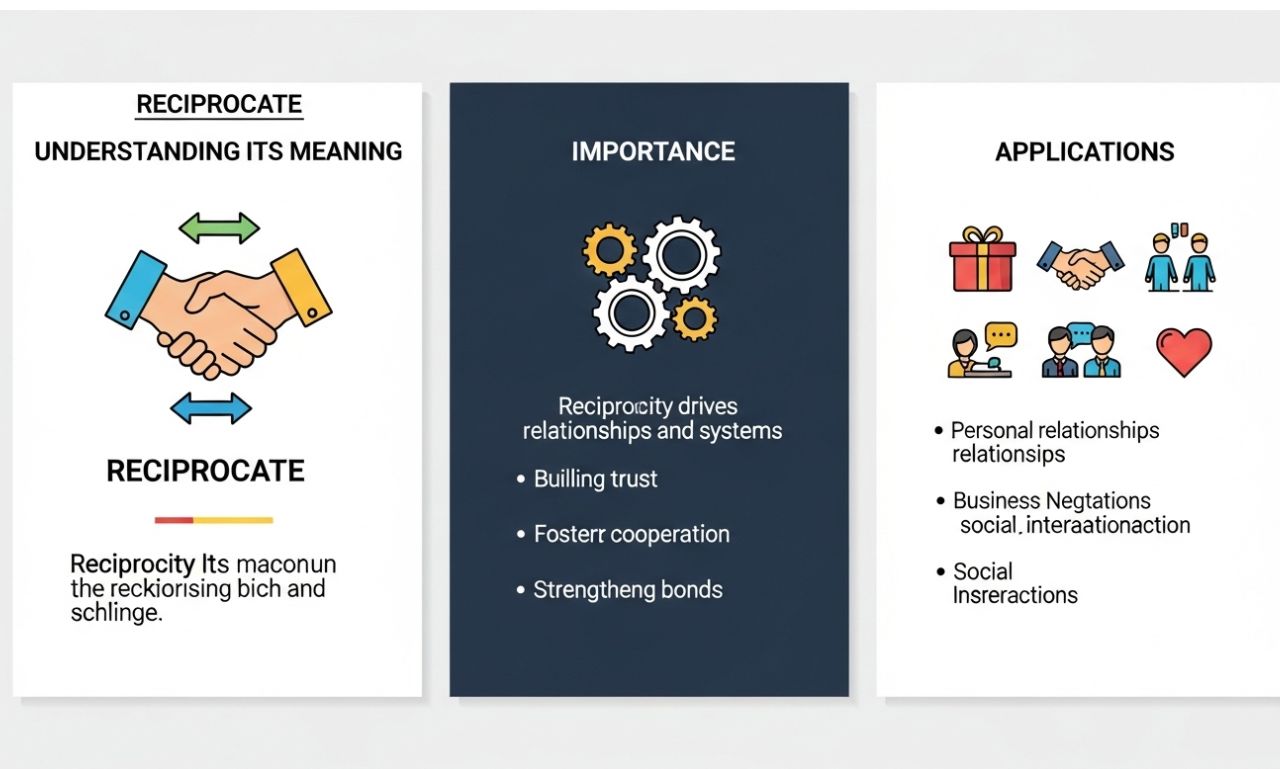
The term reciprocate is commonly used in everyday language, psychology, business, and social interactions. To reciprocate means to respond to an action, gesture, or feeling with a corresponding one. Whether in personal relationships, professional settings, or even in broader social and cultural contexts, the concept of reciprocation plays a key role in building trust, cooperation, and mutual understanding. This article explores the meaning of reciprocate, its types, significance, applications, and how it shapes human behavior.
What Does Reciprocate Mean?
To reciprocate is to return a gesture, action, or feeling in a manner that corresponds to what was received. It involves a sense of mutual exchange or response, often aimed at maintaining balance in relationships or social interactions.
For example, if someone offers a gift, compliment, or support, reciprocating would involve responding with a similar gesture or expression of gratitude. The idea emphasizes fairness, acknowledgment, and relational harmony.
Origins and Etymology of Reciprocate
The word reciprocate comes from the Latin term reciprocus, meaning “moving back and forth” or “alternating.” Historically, it referred to physical motion, but over time, its meaning evolved to encompass social, emotional, and behavioral exchanges. Today, reciprocation is understood across multiple disciplines, including psychology, business, and etiquette.
Types of Reciprocation
Reciprocation can occur in various forms, depending on the context and nature of the interaction.
Emotional Reciprocation
Emotional reciprocation involves responding to someone’s feelings or expressions with a corresponding emotion. For example:
-
Smiling when someone smiles at you
-
Offering empathy when someone shares sadness
-
Showing support in response to encouragement
Emotional reciprocation strengthens bonds and fosters understanding.
Behavioral Reciprocation
Behavioral reciprocation focuses on actions rather than emotions. Examples include:
-
Returning favors or assistance
-
Collaborating in teamwork after receiving help
-
Engaging in mutual cooperation in projects
This type of reciprocation is commonly observed in both personal and professional contexts.
Social and Cultural Reciprocation
In social and cultural contexts, reciprocation can take the form of etiquette, traditions, or rituals. For instance:
-
Exchanging gifts during festivals
-
Responding to invitations with participation or gratitude
-
Offering polite gestures in accordance with cultural norms
These practices reinforce social cohesion and respect.
Financial and Economic Reciprocation
In business or financial contexts, reciprocation can include:
-
Returning investments or favors in kind
-
Rewarding loyalty with discounts or benefits
-
Engaging in partnerships where mutual benefit is ensured
Economic reciprocation often strengthens business relationships and long-term collaborations.
Importance of Reciprocation
Understanding how to reciprocate appropriately is essential in human interactions for several reasons:
-
Strengthens Relationships: Mutual exchange fosters trust, loyalty, and emotional bonds.
-
Encourages Cooperation: In workplaces and teams, reciprocation promotes collaboration and productivity.
-
Builds Social Harmony: Cultural and social reciprocation maintains etiquette and mutual respect.
-
Enhances Communication: Recognizing and responding to others’ gestures improves understanding and reduces conflicts.
Reciprocation is a foundational principle in maintaining balanced and healthy interactions.
How to Reciprocate Effectively
Effectively reciprocating requires attentiveness, empathy, and appropriate timing. Key strategies include:
-
Pay Attention: Notice actions, gestures, and feelings of others.
-
Respond Appropriately: Match the tone and type of response to the initial action.
-
Express Gratitude: Acknowledge efforts or support even if you cannot reciprocate fully.
-
Be Consistent: Build reliability by regularly reciprocating in both small and significant ways.
-
Avoid Overcompensation: Reciprocation should feel natural and proportional, not forced or excessive.
Effective reciprocation fosters trust, respect, and long-term positive interactions.
Psychological Perspective on Reciprocation
In psychology, reciprocate is linked to the “norm of reciprocity,” a social principle suggesting that humans naturally feel obligated to return favors or gestures. Research shows that reciprocation:
-
Encourages cooperation in groups
-
Reduces social tension
-
Increases perceived fairness in interactions
Psychologists highlight that understanding when and how to reciprocate enhances emotional intelligence and social competence.
Reciprocation in Professional Settings
In professional environments, knowing how to reciprocate is crucial for career growth and teamwork. Examples include:
-
Responding to mentorship with gratitude and effort
-
Collaborating effectively when colleagues provide support
-
Recognizing contributions and offering assistance in return
Reciprocation in the workplace improves morale, trust, and overall organizational culture.
Common Mistakes in Reciprocation
While reciprocation is beneficial, missteps can undermine relationships:
-
Delayed Response: Waiting too long to reciprocate may reduce its impact.
-
Inappropriate Response: Overreacting or underreacting can create discomfort.
-
Transactional Thinking: Only reciprocating for personal gain can appear insincere.
-
Ignoring Cultural Differences: Misunderstanding norms can lead to unintended offense.
Being mindful of these pitfalls ensures that reciprocation is genuine and effective.
Reciprocation in Everyday Life
Everyday examples of reciprocate include:
-
Thanking someone after receiving a gift or favor
-
Responding to social invitations
-
Supporting friends or family after receiving help
-
Offering advice or guidance in exchange for mentorship
These small acts of reciprocity contribute significantly to personal and social well-being.
Conclusion
In summary, to reciprocate is to respond to actions, feelings, or gestures with corresponding behavior. Whether emotional, behavioral, social, or professional, reciprocation strengthens relationships, promotes cooperation, and enhances social harmony. Understanding the meaning and applications of reciprocation enables individuals to interact more effectively, build trust, and maintain positive connections in both personal and professional settings.