
 By admin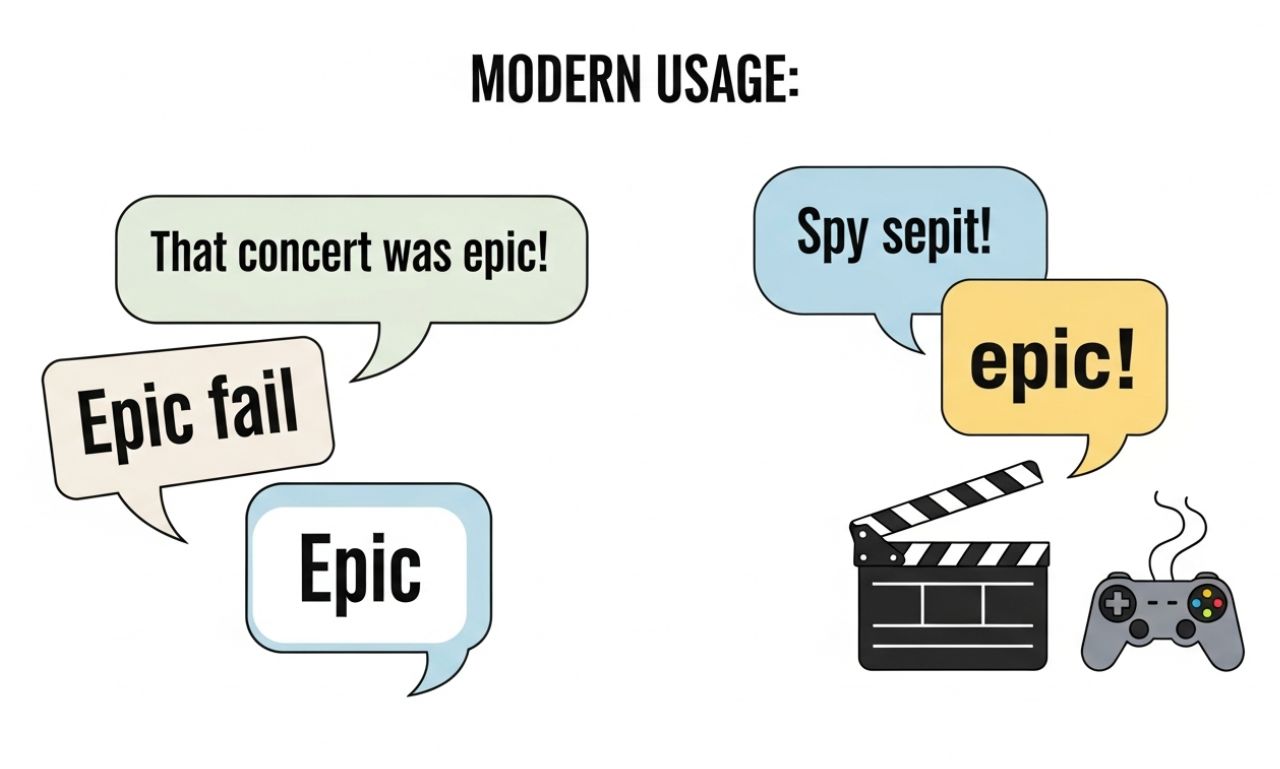
The term epic has been widely used for centuries, evolving from ancient literature to contemporary culture. Whether in storytelling, movies, gaming, or everyday conversation, the word epic represents grandeur, scale, and extraordinary events. Understanding epic is essential for anyone exploring literature, media, or modern communication, as it captures both historical significance and modern relevance.
What Does Epic Mean?
Epic originally refers to a long narrative poem celebrating heroic deeds, often tied to mythology or history. Famous examples include The Iliad and The Odyssey, where epic storytelling preserves culture, history, and moral lessons. Over time, epic has also become a general adjective meaning “remarkable,” “grand,” or “heroic.”
In contemporary usage, epic can describe:
-
Movies or TV shows with large-scale plots
-
Video games with extensive worlds and storylines
-
Events or experiences that are extraordinary
-
Personal achievements or memorable moments
Historical Origins of Epic
The roots of epic date back to ancient civilizations. Epic poetry was a primary way to record history, celebrate heroes, and convey cultural values. Civilizations like the Greeks, Romans, Mesopotamians, and Indians contributed iconic epics such as:
-
The Iliad and The Odyssey (Greek)
-
The Aeneid (Roman)
-
Epic of Gilgamesh (Mesopotamian)
-
Mahabharata and Ramayana (Indian)
These works highlight e pic storytelling as a way to inspire, educate, and entertain audiences across generations.
Key Characteristics of an Epic
Several features define the traditional e pic:
1. Heroic Figures
An e pic usually centers on a hero who demonstrates courage, wisdom, or extraordinary strength. These heroes often face impossible challenges.
2. Grand Scale
E pic narratives are vast in scope, spanning nations, wars, or even supernatural realms. The story often includes multiple characters and complex plots.
3. Cultural Significance
E pics preserve societal values, history, and mythology, reflecting the culture that produced them.
4. Elevated Style
Language in e pics is often formal, poetic, and dramatic, using literary devices like similes, metaphors, and repetition.
Epic in Modern Media
The concept of e pic has evolved beyond classical literature into modern media. Today, the term is widely applied in films, video games, and storytelling to describe large-scale, immersive, and dramatic experiences.
Epic Movies
Modern cinema often labels large, visually stunning movies as e pic. Examples include The Lord of the Rings trilogy, Gladiator, and historical war dramas.
Epic Gaming
Video games increasingly use e pic storytelling to create immersive worlds, with complex plots, heroic quests, and expansive maps. Popular e pic games include The Legend of Zelda, Final Fantasy, and Elder Scrolls series.
Epic Experiences
Beyond media, e pic can describe extraordinary life events, challenges, or achievements that leave a lasting impression. Social media often uses e pic to convey excitement or grandeur, e.g., “That concert was e pic!”
Why Epic Captures Our Imagination
Humans are drawn to e pic because it combines storytelling, heroism, and grandeur. E pic tales provide:
-
Inspiration through heroic actions
-
Emotional engagement with extraordinary events
-
Escape into vast, imaginative worlds
-
Lessons in resilience, morality, and culture
This enduring appeal ensures that e pic storytelling remains relevant across generations and media formats.
Epic in Language and Popular Culture
The word e pic has also become a part of everyday language, often used informally to describe anything remarkable or extraordinary. Phrases like “an e pic fail” or “an e pic journey” demonstrate its flexibility in modern conversation.
Social media and marketing also use e pic to attract attention, often highlighting grand events, campaigns, or viral content.
Tips for Recognizing an Epic
To identify an ep ic in literature, media, or storytelling, consider:
-
Scope: Is the story large in scale?
-
Heroism: Does it center around extraordinary characters?
-
Cultural or historical relevance: Does it preserve or convey values?
-
Dramatic impact: Does it create awe, wonder, or inspiration?
These criteria apply both to classical works and modern adaptations, ensuring the story or experience qualifies as truly ep ic.
Conclusion
In summary, ep ic is a powerful concept that bridges ancient literature and modern culture. From the ep ic poems of antiquity to modern movies, games, and experiences, the term conveys grandeur, heroism, and lasting impact. Understanding ep ic helps us appreciate storytelling, cultural heritage, and the extraordinary in everyday life. Whether in classical texts, cinematic adventures, or personal achievements, the idea of ep ic continues to inspire and captivate audiences worldwide.