
 By admin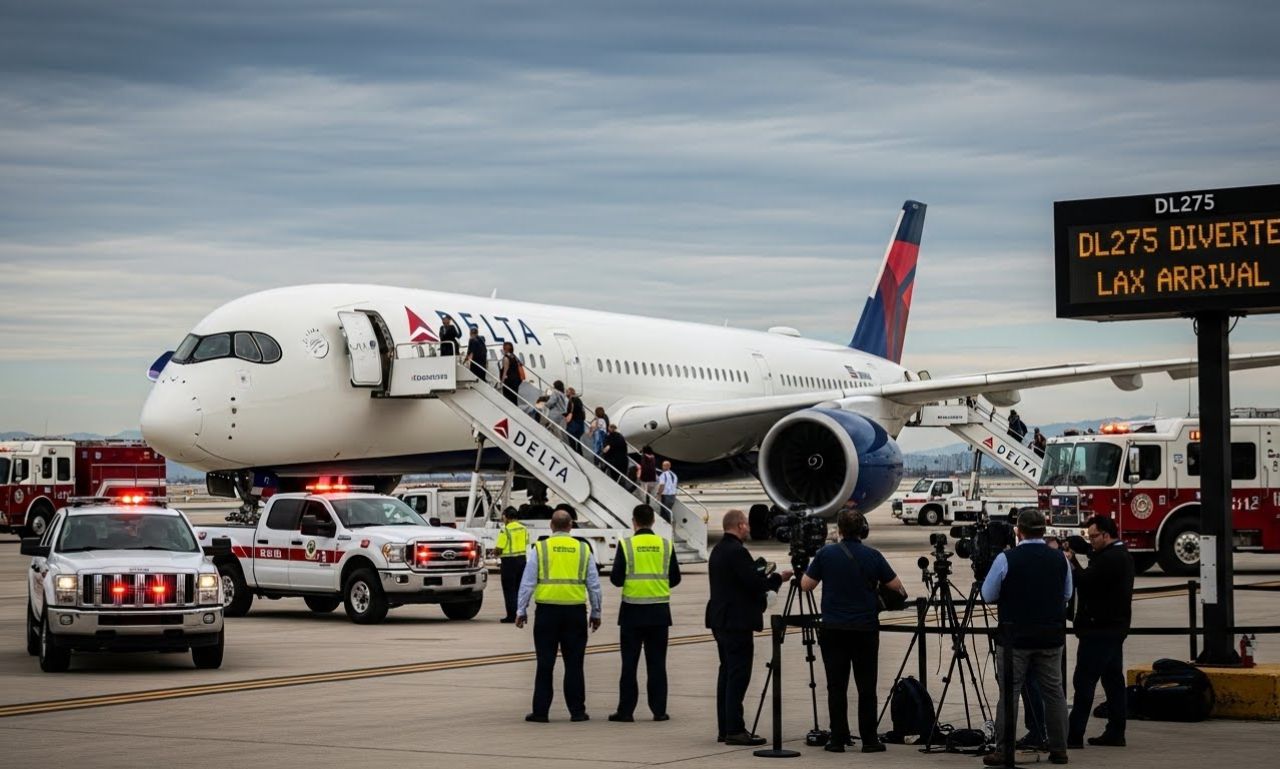
When Delta Flight DL275 diverted LAX, it became a major talking point in aviation news, drawing attention from travelers and industry observers alike. This long-haul Delta Air Lines flight—a scheduled service from Detroit Metropolitan Wayne County Airport (DTW) to Tokyo Haneda Airport (HND)—unexpectedly altered course mid-air and landed at Los Angeles International Airport (LAX) instead of continuing across the Pacific. The decision underscored the priority of passenger safety and showcased how modern airlines respond to in-flight technical issues under emergency protocols.
What Was Delta Flight DL275?
Before exploring why Delta Flight DL275 diverted LAX, it’s important to understand the flight’s context:
-
Flight Number: DL275
-
Airline: Delta Air Lines
-
Aircraft: Airbus A350-900 (Registration N508DN)
-
Route: Detroit (DTW) → Tokyo Haneda (HND)
-
Event: Mid-flight diversion to Los Angeles International Airport (LAX)
The flight was scheduled as a trans-Pacific service connecting the U.S. Midwest with Japan’s capital. However, an issue encountered during cruising prompted the diversion.
Why Did Delta Flight DL275 Divert to LAX?
Mechanical/Technical Issue
The primary reason Delta Flight DL275 diverted LAX was due to a malfunction involving the aircraft’s engine anti-ice system. While flying over the North Pacific at cruising altitude, pilots identified this issue and determined that continuing to Tokyo could pose safety risks, especially in conditions where ice buildup might occur on critical engine components.
Anti-ice systems are essential for preventing ice accumulation at high altitudes, which can disrupt airflow and reduce engine performance. Upon detecting odd readings or alerts from this subsystem, Delta’s crew followed strict safety protocols, prompting an immediate diversion.
Choice of Los Angeles (LAX)
Choosing LAX instead of closer options wasn’t random. Los Angeles International Airport has:
-
Long runways capable of handling large aircraft like the Airbus A350
-
On-site Delta maintenance and engineering support
-
Comprehensive emergency services and technical resources
These factors made LAX a logical and safe choice for an unscheduled landing when the aircraft faced a technical concern far from the intended route.
How the Diversion Happened
Mid-Flight Decision
While cruising at around 38,000 feet, somewhere southwest of Anchorage, Alaska, the flight crew received the anti-ice warning from the Rolls-Royce Trent XWB engine powering the aircraft. Rather than pressing ahead into uncertain conditions, the captain and Delta operations team decided to reroute to the nearest well-equipped airport to assess the aircraft safely.
Journey to LAX
Instead of returning to the departure airport or diverting to closer airfields (such as Anchorage or Seattle), the crew oriented the aircraft toward Los Angeles. Because the plane was so far out over the Pacific and needed robust technical support upon landing, LAX provided the ideal destination given Delta’s infrastructure and resources there.
Landing at Los Angeles International Airport (LAX)
Delta Flight DL275 diverted LAX landed safely on Runway 06R in the early morning hours. Despite being an unexpected landing after approximately five hours of additional flying, the aircraft touched down without incident, and all passengers and crew disembarked safely.
After the Landing
Once on the ground:
-
Maintenance crews conducted detailed diagnostics on the aircraft
-
Passengers were assisted by Delta staff with rebooking and accommodations
-
Some travelers were rerouted on alternate flights to continue their journey to Tokyo
-
Delta confirmed the remainder of the original flight would be canceled until technical issues were resolved
No injuries were reported, and the situation was managed according to established aviation safety standards.
Passenger Experience During the Diversion
Immediate Reaction
Passengers on board shared a mix of concern and relief as the diversion unfolded. Such spontaneous changes in flight trajectory can cause anxiety, especially on long-haul routes over remote regions. However, cabin crew maintained communication and followed standard safety procedures to keep everyone calm and informed.
After Touchdown
Upon landing at LAX, passengers were met with:
-
Ground support for connections and onward planning
-
Refreshments and accommodation arrangements where needed
-
Rebooking support through airline staff and digital notifications
Immediate logistical challenges were addressed as part of Delta’s customer care efforts, though some experienced delays and inconvenience due to the unscheduled stop.
Broader Implications of the Diversion
Aviation Safety Emphasis
The incident where Delta Flight DL275 diverted LAX underscores the importance of safety protocols in aviation. Rather than risking continued flight with potential engine system problems, the crew prioritized precautionary measures in line with industry standards.
Diversions like this remind travelers and industry players alike that modern airliners are equipped with numerous sensors and backup systems—each designed to trigger when conditions fall outside normal operating limits.
Operational Costs and Logistics
Diversions have financial implications for airlines due to:
-
Additional fuel consumption
-
Ground handling and maintenance costs
-
Passenger rebooking and accommodations
In the case of DL275, the diversion represented significant additional operational effort, but it was widely seen as the correct safety-first decision.
Conclusion:
In summary, Delta Flight DL275 diverted LAX was a notable flight event in 2025 that highlighted how robust safety culture and professional decision-making protect passengers and crew. Prompt identification of the anti-ice issue and the proactive choice to land at Los Angeles International Airport ensured everyone landed safely, even if plans changed unexpectedly.
Flight diversions aren’t uncommon in global aviation and often reflect careful judgment rather than crisis. In this case, the diversion offered a real-world example of aviation safety protocols working as intended, reminding us how airline crews and systems are prepared for the unexpected.