
 By Brain Killer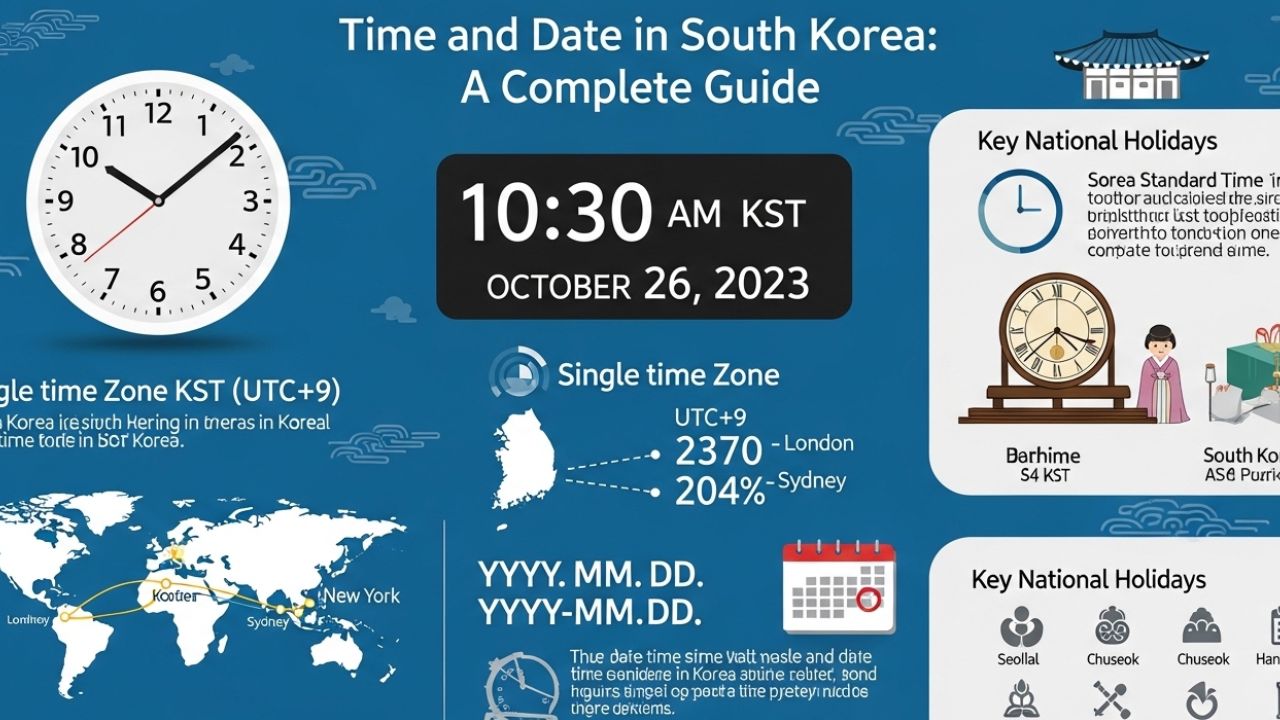
Understanding the time and date in South Korea is essential for travelers, students, and professionals interacting with this dynamic country. Whether you are planning a trip, scheduling a business meeting, or simply curious about global time systems, knowing how South Korea tracks time and organizes its calendar can be incredibly useful.
South Korea follows a standardized time system that keeps the entire country synchronized. Unlike some nations that use multiple time zones, South Korea operates under a single official time, making it easier to manage activities nationwide.
What Is the Current Time and Date in South Korea?
The time and date in South Korea are based on Korea Standard Time (KST), which is:
- UTC +9 hours
- No daylight saving time adjustments
For example, if it is 12:00 PM (noon) in Coordinated Universal Time (UTC), it will be 9:00 PM in South Korea on the same day.
Because the country does not change clocks seasonally, the time and date in South Korea remain consistent throughout the year.
Time Zone System Used in South Korea
Korea Standard Time (KST)
South Korea uses only one time zone known as Korea Standard Time. This system ensures that all regions, including the capital Seoul, follow the same clock.
No Daylight Saving Time
Unlike countries such as the United States or parts of Europe, South Korea does not observe daylight saving time. This means:
- Clocks are never moved forward or backward
- The time and date in South Korea stay stable year-round
This simplicity reduces confusion, especially for international communication.
How Dates Are Written in South Korea
When discussing the time and date in South Korea, it is important to understand how dates are formatted.
Standard Date Format
South Korea typically uses the format:
Year / Month / Day (YYYY.MM.DD or YYYY-MM-DD)
For example:
- 2026.03.29
- 2026-03-29
This format is widely used in official documents, business settings, and digital systems.
Cultural Importance of Time and Date in South Korea
The concept of time and date in South Korea goes beyond simple scheduling—it is deeply connected to culture and daily life.
Punctuality and Respect
Punctuality is highly valued in South Korean society. Being late can be seen as disrespectful, especially in professional or formal settings.
Special Dates and Celebrations
Many important events depend on specific dates, including:
- Lunar New Year (Seollal)
- Harvest Festival (Chuseok)
These holidays often follow the lunar calendar, meaning their dates change each year in the Gregorian system.
Digital Tools for Tracking Time and Date in South Korea
In today’s digital age, keeping track of the time and date in South Korea is easier than ever.
Smartphones and Devices
Most devices automatically adjust to Korea Standard Time when you enter the country or select the region.
Online Clocks and Apps
World clock applications allow users to compare time zones instantly, which is especially helpful for international communication.
Business and Scheduling Software
Professionals often rely on digital calendars that automatically convert time zones, ensuring accurate scheduling with South Korean partners.
Time Differences Between South Korea and Other Countries
Understanding global time differences is key when dealing with the time and date in South Korea.
Here are some examples:
- South Korea is 9 hours ahead of UTC
- It is 14 hours ahead of New York (EST) during standard time
- It is 1 hour ahead of Japan
These differences are important for planning calls, flights, and virtual meetings.
Common Mistakes When Dealing With Time and Date in South Korea
Even though the system is straightforward, people sometimes make mistakes when working with the time and date in South Korea.
1. Forgetting the Time Difference
Misjudging the time gap can lead to missed meetings or delayed communication.
2. Confusing Date Formats
Although South Korea uses YYYY-MM-DD, international users may misinterpret it.
3. Assuming Daylight Saving Time
Some people incorrectly assume that South Korea adjusts clocks seasonally, which it does not.
Tips for Managing Time and Date in South Korea
To stay accurate and organized, consider these tips:
- Always double-check the time difference before scheduling
- Use digital calendars with automatic time zone conversion
- Familiarize yourself with the YYYY-MM-DD date format
- Set reminders for important events
These simple practices can help you avoid confusion and stay on track.
Business Etiquette and Time in South Korea
In professional settings, the time and date in South Korea play a crucial role.
Meetings and Appointments
- Arrive on time or slightly early
- Confirm meeting times in advance
- Use clear date formats to avoid misunderstandings
Work Culture
South Korea is known for its structured and disciplined work environment, where time management is taken seriously.
Conclusion:
In conclusion, understanding the tim e and da te in South Ko rea is essential for effective communication, travel planning, and business success. With a single time zone, no daylight saving changes, and a clear date format, South Korea offers a straightforward yet highly efficient system.
By staying aware of time differences, cultural expectations, and proper formatting, you can easily adapt to the South Korean way of managing time. Whether you are visiting or working with people in the country, mastering this knowledge ensures smoother interactions and better planning.