
 By Brain Killer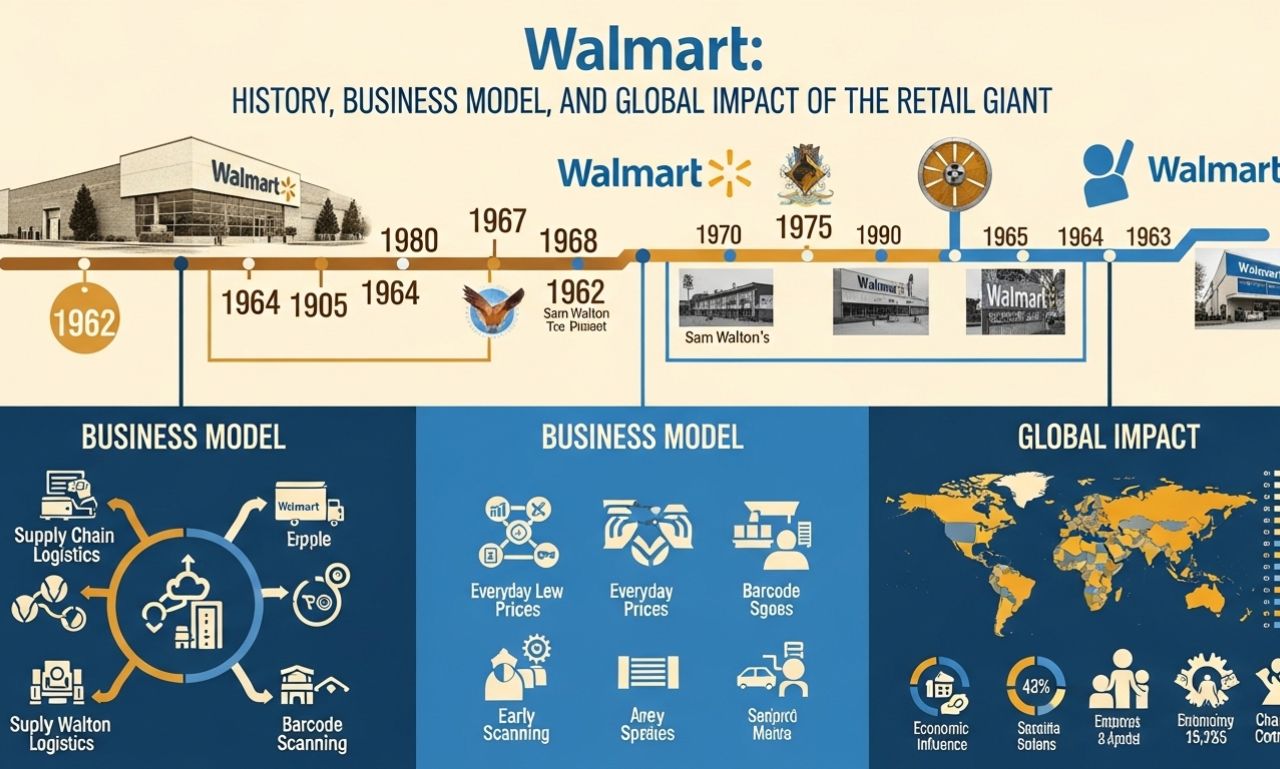
Walmart is one of the largest and most influential retail companies in the world. Known for offering a wide variety of products at affordable prices, Walmart has become a global shopping destination for millions of customers. From groceries and electronics to clothing and household items, Walmart provides a convenient one-stop shopping experience.
Founded in 1962 by entrepreneur Sam Walton, the company started with a simple mission: help people save money so they can live better. Over the decades, Walmart has grown from a small discount store in Arkansas to a massive multinational corporation with thousands of stores worldwide.
Today, Walmart continues to dominate the retail industry by combining low prices, efficient supply chains, and expanding digital services.
The History of Walmart
The Beginning of Walmart
The story of Walmart began in 1962 when Sam Walton opened the first Walmart store in Rogers, Arkansas, United States. His goal was to create a store that offered everyday products at lower prices than competitors. Walton believed that by reducing profit margins and increasing sales volume, he could attract more customers.
This strategy proved successful, and the company quickly expanded across the southern United States during the 1960s and 1970s.
Rapid Growth and Expansion
During the 1970s and 1980s, Walmart expanded rapidly. The company introduced new store formats and adopted advanced technology to improve inventory management and customer service. By the end of the 1970s, Walmart operated hundreds of stores and generated billions in annual sales.
In 1970, Walmart became a publicly traded company and began trading shares on the stock market, which helped fund further expansion.
Becoming a Global Retail Giant
In the 1990s and early 2000s, Walmart expanded internationally, opening stores in countries such as Canada, Mexico, China, and the United Kingdom. By the late 1990s, the company had thousands of stores worldwide and became one of the largest retailers globally.
Today, Walmart operates more than 10,700 stores and clubs in multiple countries and employs over 2 million people, making it one of the largest private employers in the world.
Walmart’s Business Model
Everyday Low Price Strategy
One of the main reasons behind Walmart’s success is its Everyday Low Price (EDLP) strategy. Instead of offering occasional discounts, Walmart focuses on maintaining consistently low prices on products.
This strategy attracts millions of shoppers who want affordable goods without waiting for seasonal sales.
Efficient Supply Chain
Walmart has one of the most advanced supply chain systems in the retail industry. The company operates numerous distribution centers and uses advanced technology to track inventory and deliveries.
By controlling logistics and transportation, Walmart reduces operational costs and ensures products are always available on store shelves.
Large Product Variety
Another important feature of Walmart is the wide range of products available in its stores. Customers can purchase:
-
Groceries
-
Electronics
-
Clothing
-
Household items
-
Furniture
-
Beauty products
-
Pharmacy items
This variety makes Walm art a convenient shopping destination for families.
Types of Walmart Stores
Walm art operates different store formats to serve various customer needs.
Walmart Supercenters
Walm art Supercenters are large stores that combine grocery shopping with general merchandise. These stores often include bakeries, pharmacies, and auto service centers.
Discount Stores
Traditional Walm art discount stores focus mainly on general merchandise such as clothing, electronics, and home goods.
Sam’s Club
Sam’s Club is a membership-based warehouse club owned by Walm art. Customers pay a membership fee to buy products in bulk at lower prices.
This model is similar to other warehouse retailers and is popular among families and businesses.
Walmart in the Digital Era
Growth of E-Commerce
As online shopping grew, Walm art invested heavily in e-commerce to compete with major digital retailers like Amazon.
The company launched its online store in the 1990s and has continued expanding digital services, including online ordering and home delivery.
Today, Wal mart’s online marketplace offers millions of products and allows third-party sellers to reachglobal customers.
Technology and Innovation
Wal mart has also invested in advanced technologies such as artificial intelligence, data analytics, and automation. These technologies help improve supply chain efficiency and customer experience.
In recent years, the company has expanded digital services such as:
-
Same-day delivery
-
Online grocery pickup
-
Mobile shopping apps
-
Subscription services like Wal mart+
These innovations help Walm art stay competitive in the rapidly evolving retail market.
Global Presence of Walmart
Walmart operates stores and e-commerce platforms in multiple regions around the world. The company serves millions of customers every week through its retail network.
Its international operations include markets such as:
-
Canada
-
Mexico
-
China
-
India (through Flipkart)
-
Chile
-
Central America
This global presence allows Walm art to reach diverse markets and adapt its strategies to local consumer needs.
Walmart’s Economic and Social Impact
Walmart plays a significant role in the global economy. As one of the world’s largest companies, itinfluences supply chains, employment, and consumer pricing.
Job Creation
With more than two million employees worldwide, Wal mart is one of the largest private employers globally.
The company provides jobs in retail, logistics, technology, and corporate management.
Affordable Products
Walm art’s focus on low prices helps millions of families access essential goods at affordable rates. Groceries alone account for a major portion of its sales in the United States.
Community Contributions
The company also participates in community programs, charitable donations, and disaster relief efforts in various countries.
Challenges and Competition
Despite its success, Walmart faces strong competition in both physical retail and e-commerce.
Major competitors include:
-
Amazon
-
Costco Wholesale
-
Target Corporation
These companies compete with Walm art in pricing, product selection, and online shopping services.
To remain competitive, Walm art continues investing in technology, logistics, and digital platforms.
Conclusion
Walm art has grown from a small discount store into one of the largest and most powerful retail corporations in the world. Its commitment to low prices, efficient supply chains, and wide product selection has helped it attract millions of loyal customers.
With thousands of stores, millions of employees, and expanding digital services, Walm art continues to shape the global retail industry. As the company adapts to new technologies and changing consumer habits, it is likely to remain a dominant force in the world of retail for many years to come.